
Designing a local area network (LAN)
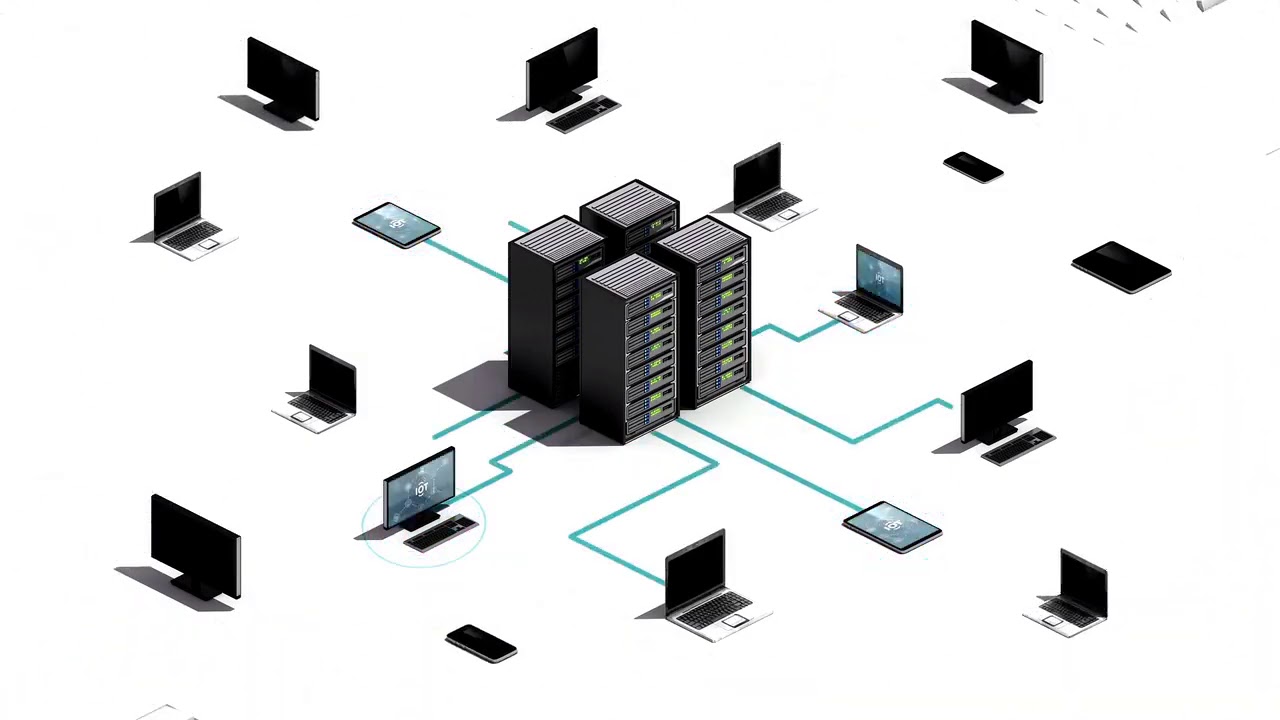
mdtech provides services for developing Local Area Network (LAN) projects of varying scale and complexity.
mdtech provides services for developing Local Area Network (LAN) projects of varying scale and complexity.
What is a LAN and what are its functions?
An enterprise Local Area Network (LAN) is a collection of interconnected computer systems and network devices that facilitate the transmission of data and resources within an organization.
The main goal of a LAN is to create a unified infrastructure for information exchange, shared use of applications and data, and access to corporate services and the internet.
An organizational LAN allows employees to:
-
Efficiently exchange data and documents.
-
Access shared resources and peripheral devices.
-
Collaborate and manage projects jointly.
-
Store critical data centrally and securely.
-
Increase the productivity and flexibility of many workflows.
Network Topology Types:
| Topology | Pros | Cons |
| Bus | Simple installation, low cost. | Low performance with a large number of devices, difficulty in detecting and fixing faults. |
| Star | High performance, easy management and diagnostics, high resilience to individual device failures. | Dependency on the central node (server or switch), higher cost due to more cabling. |
| Ring | Uniform load distribution, simple access control mechanism. | Difficult scaling, vulnerability to failure in one node which can halt the entire network. |
| Mesh | High reliability and fault tolerance, ability to choose optimal data transmission routes. | High complexity and cost of installation, requirement for a greater amount of cables and equipment. |
mdtech Technical Experts are ready to design your LAN and create a network that will meet the company's current and future needs.
Why is a LAN Project Necessary?
Developing a Local Area Network (LAN) project is a critically important stage for ensuring the reliability, scalability, and efficiency of the corporate infrastructure. This process involves creating detailed documentation that describes the network architecture, its topology, device locations, connection points, and equipment specifications.
DO NOT IGNORE DESIGN! Ignoring the design phase can lead to problems with network performance, security, and manageability, which ultimately negatively affects business processes.
Stages of LAN Design
-
Information Gathering and Requirements Analysis: Assessing network goals, determining the number of users, device types, traffic volumes, and future needs.
-
Development of the Technical Specification (TS): Formulating the main network requirements (throughput, reliability, scalability, security). TS agreement with the customer.
-
Network Design and Topology Selection: Choosing the appropriate topology, determining optimal node placement, and developing connection and routing schemes.
-
Equipment Selection: Choosing network switches, routers, servers, and developing specifications based on performance and reliability requirements. Assessing compatibility with existing infrastructure.
-
Development of the Cabling System Scheme: Planning the placement of cable routes, selecting cable types (copper, fiber optic), and considering requirements for interference protection.
-
Creation of Project Documentation: Developing detailed diagrams, placement plans, drawings, and preparing technical conditions.
-
Verification and Project Testing: Checking project compliance with TS requirements and conducting simulation tests to assess performance.
-
Project Approval and Sign-off: Presentation of the finished LAN project to the customer, discussion of potential revisions, final approval, and handover of all documentation.
DO YOU HAVE A LAN DESIGN TASK? Our specialists are ready to implement a project of any complexity with a network availability guarantee of 99.999%. Submit a request, and we will promptly contact you.
Software for LAN Design
To design LANs that meet all modern business requirements, we use advanced software solutions such as AutoCAD, CAD5D, and ZWCAD.
The use of professional solutions allows us to create accurate floor plans, elaborate equipment location schemes, and form a complete package of project documentation.
Key Advantages for Our Clients:
-
Accuracy: Detailed documentation minimizes errors during network installation and configuration, shortening project implementation timelines.
-
Cost-Effectiveness: Thanks to automated material and equipment specification accounting, we offer optimal solutions in terms of cost and quality, which reduces risks and operating expenses.