
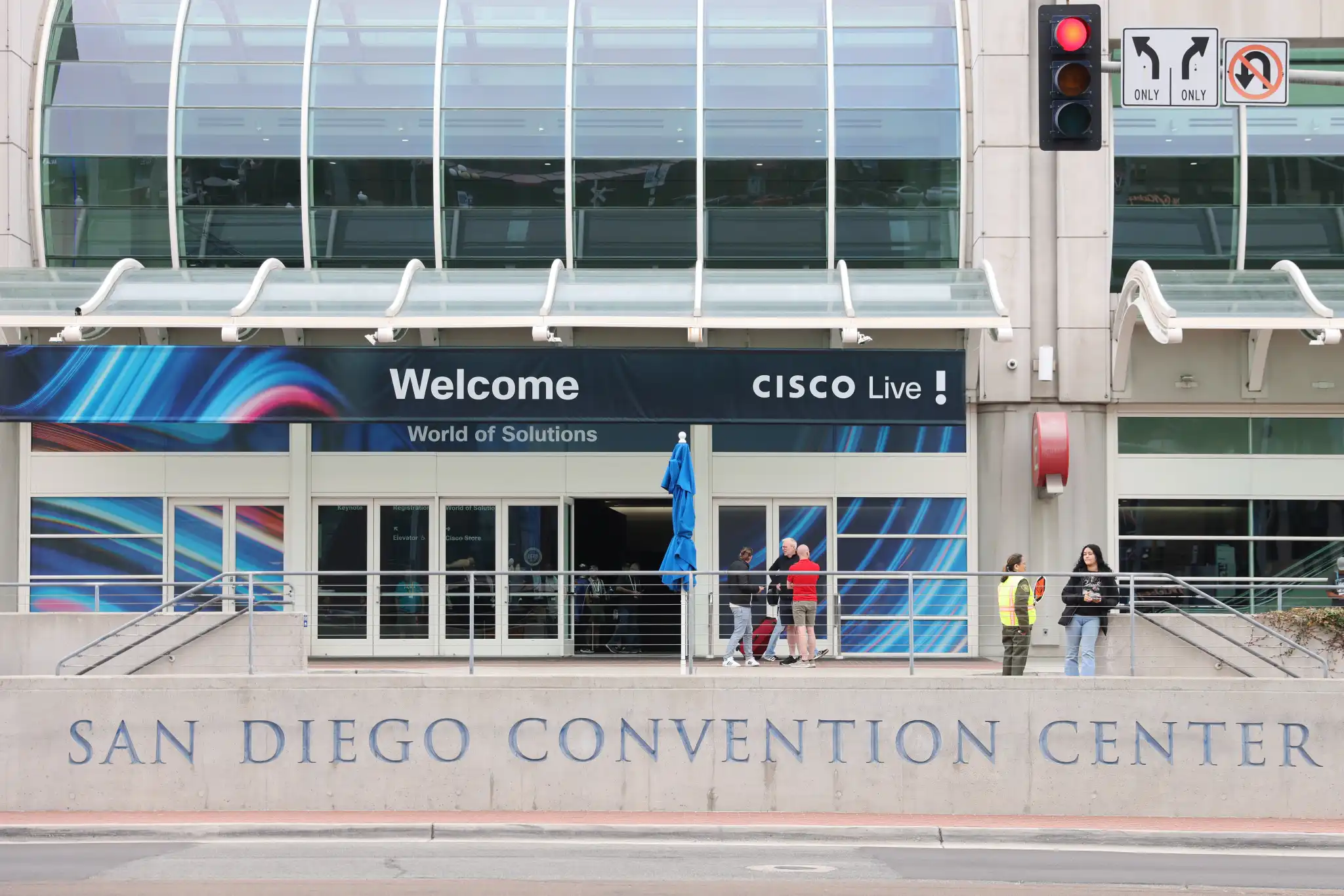
Cisco is updating networks for data centers, campus networks and branches, taking into account the requirements of artificial intelligence.
SAN DIEGO - Cisco (Nasdaq:CSCO) has updated critical components of its network device family, including switches, routers, and software for data centers, campus networks, branch offices, and the Internet of Things, as part of a massive initiative to provide the growing bandwidth and management capabilities needed by its enterprise customers to work in environments artificial intelligence.
At this week's Cisco Live conference, the company unveiled new software for managing Nexus data centers, intelligent switches for campuses, and routers for branches that support artificial intelligence or focus on AI-powered workloads.
"There is a real explosive growth in the field of artificial intelligence right now, AI is developing and diversifying much faster than anyone can keep up with it," said Craig Connors, vice president and technical director of the Cisco security group. "One of the unique advantages that Cisco can offer as a supplier of chips, computing resources, optics, network solutions, and security is that we provide customers with not just the necessary infrastructure, but a modular, extensible infrastructure that can adapt to changing AI use cases and AI workload requirements."
The Nexus Control Panel
In an effort to meet some of these data center needs, Cisco will begin offering the unified Nexus Dashboard in July, which will allow customers to view and manage the application-Centric Infrastructure and the Nexus NX-OS VXLAN EVPN networks through unified data, management, and policy enforcement. The control panel will allow customers to consolidate and control AI, LAN, SAN and Cisco IP Fabric for Media (IPFM) systems from a single interface. The new AI-based assistant in the Nexus Dashboard will help customers quickly identify and fix problems using natural language commands and intelligent fix recommendations.
"Until now, integrated network infrastructure management was just a concept, but now it has become a reality — a centralized dashboard for monitoring the status of all connected networks," said Jeetu Patel, President and Chief Product Officer of Cisco. "Thus, setting up policies and monitoring what is happening on the network are considered in a single context."
400G Optical Module
Cisco has also set a goal to increase the speed of data center backbone networks by adding a 400G optical module to its data center switches.
"We have a number of enterprise customers using data centers that have been using bidirectional optics for generations, and this is the next generation of this feature," said Bill Gartner, senior vice president and general manager of Cisco's optical Systems and Optics division. "400G enables customers to leverage existing fiber-optic infrastructure and reduces the number of fibers, so that they can use, for example, one fiber instead of two," added Gartner.
"There have been significant changes over the past year or so: the number of optical components included in 400G and 800G has increased significantly in the deployment of AI networks. For AI infrastructure, 400G and 800G optical components will become dominant in the future," Gartner said.
New capsules with artificial intelligence
In an effort to create next-generation interconnected computing infrastructures, Cisco has expanded its AI Pod offering to include an Nvidia RTX 6000 Pro graphics card and a Cisco UCS C845A M8 server.
Cisco AI Pods are pre—configured, proven, and optimized infrastructure packages that customers can connect to their data centers or peripheral environments as needed. The Pods includes Nvidia AI Enterprise, which includes pre-trained models and development tools for creating production-ready AI, and management is carried out through Cisco Intersight. According to Cisco, Pods are based on the principles of Cisco Validated Design, which offer customers pre-tested and proven network solutions that serve as the basis for building a reliable, scalable and secure network infrastructure.